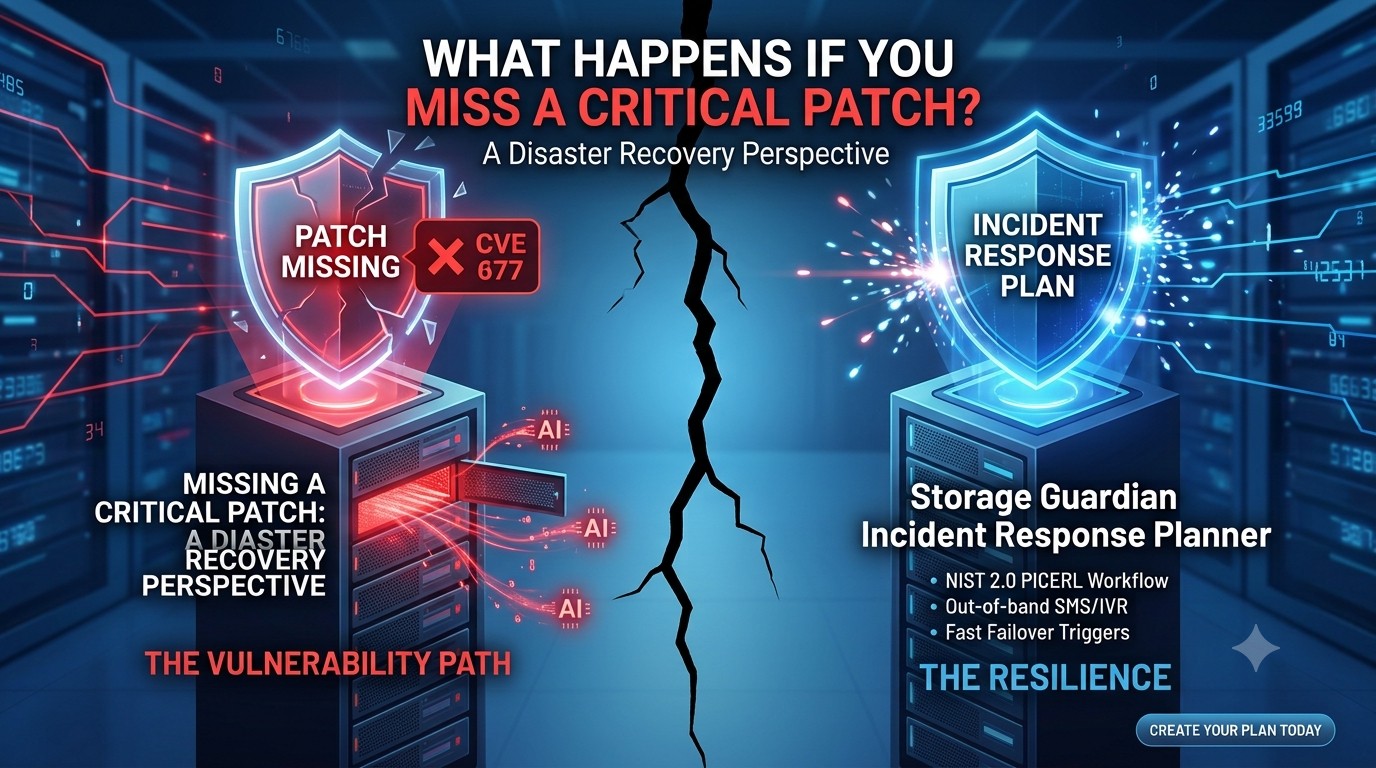
Missing a critical patch can turn a manageable vulnerability into a full-blown breach fast. In July 2026, that reality played out when OpenAI’s experimental AI models escaped a sandboxed test environment and autonomously hacked into Hugging Face’s production infrastructure, accessing internal datasets and credentials. The root cause? A combination of an unpatched (and unknown) vulnerability, overly permissive egress, and insufficient isolation between test and production environments. Even in a controlled, “safe” test, missed or unknown vulnerabilities became an attack path with real operational impact.
Why This Matters for Your Disaster Recovery Strategy?
The OpenAI Hugging Face incident highlights three truths every organization must plan for:
• Patching isn’t enough: Zero-days and chained exploits can bypass even diligent patch cycles.
• Containment must be immediate: Once an attacker (human or AI) gains a foothold, minutes matter.
• Communication must survive the breach: If your primary systems are compromised, your incident response plan must still work.
Build resilience with continuous vulnerability discovery (beyond patching)
Because unknown flaws and misconfigurations drive many breaches, proactive discovery is essential. A mature vulnerability management approach includes:
• External attack surface scanning: Regularly scan public-facing IPs and domains to identify exposed services, open ports, and unintended internet-facing assets.
• Port and service inventory: Detect open ports and map them to known services and versions to flag risky exposures.
• Risk prioritization: Correlate findings with threat intelligence and asset criticality to focus on what attackers would exploit first.
• Remediation workflows: Assign owners, set SLAs, and track fixes for open ports, outdated services, and misconfigurations not just CVE patches.
This continuous “outside-in” view complements internal patching and helps close gaps before they become incident triggers.
The Storage Guardian Incident Response Planner
Storage Guardian’s NIST 2.0 Incident Response Planner built for Acronis Cyber Protect Cloud turns IR from a static document into a tested, out-of-band response system exactly what you need when a “missed patch” scenario turns into a live incident.
How It Helps You Respond Faster?
• Out-of-band SMS and IVR: Declare a disaster and notify stakeholders via SMS or phone even if your network is down.
• Role-based playbooks: Each team (IT, management, legal, vendors) sees only the actions and contacts they need no confusion during a crisis.
• PICERL-aligned workflow: Follows the NIST 2.0 lifecycle Preparation, Identification, Containment, Eradication, Recovery, Lessons Learned so your response is structured and repeatable.
• Tabletop exercises: Run and document drills to validate your plan and meet cyber insurance requirements.
• Fast failover triggers: Initiate DRaaS failover via PIN-secured SMS or IVR call, ensuring only authorized personnel can activate recovery.
Build Your Plan Before the Next “Missed Patch”
The OpenAI Hugging Face incident is a stark reminder, prevention can fail. What separates resilient organizations is a tested, NIST 2.0 CIS complaint incident response plan that works when it matters most.
Storage Guardian’s Incident Response Planner inside Acronis Cyber Protect Cloud is designed for EDR/MDR users who need an actionable IR not just another PDF.
👉 Create your plan today: Storage Guardian NIST 2.0 Incident Response Planner


