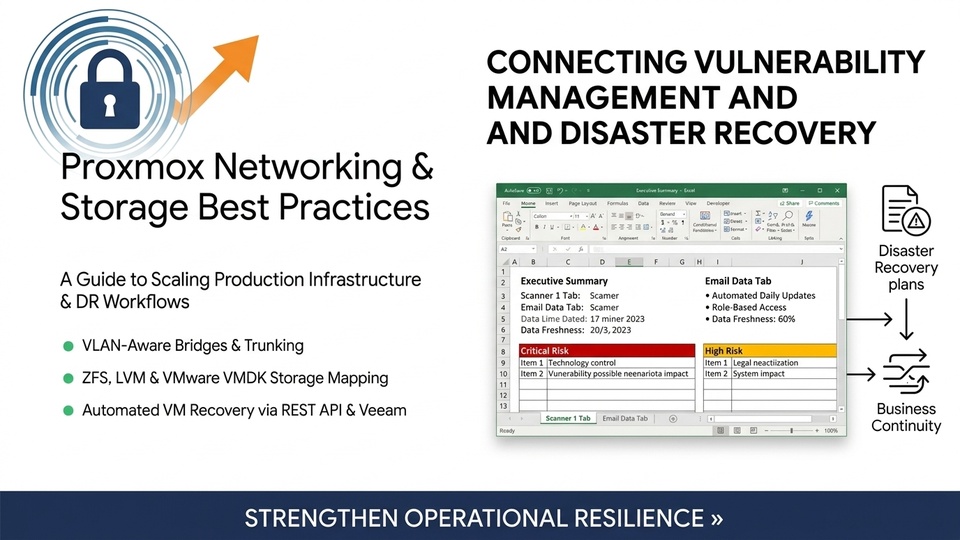
As organizations look for flexible alternatives to traditional virtualization platforms, Proxmox VE is becoming an increasingly attractive option for businesses and managed service providers (MSPs). However, successful Proxmox deployment at scale requires more than migrating virtual machines. MSPs must consider how to structure Proxmox environments, resource pools, customers, networks, and service plans.
A well-designed architecture improves resource management, customer isolation, automation, and disaster recovery while making future expansion easier.
What Are Proxmox Resource Pools?
Proxmox resource pools provide a logical way to organize virtual machines, containers, and other infrastructure resources. For MSPs managing multiple customers, resource pools can simplify administration and establish clearer boundaries between workloads.
One important architectural decision is whether resource pools should be organized around customers, service plans, or a combination of both.
A plan-based model can work well when customers receive standardized services. For example, a premium virtualization or disaster recovery plan could be associated with predefined infrastructure resources.
A customer-based model provides greater flexibility for organizations requiring dedicated resources, specific security policies, or infrastructure in different locations.
For MSPs, the best approach should balance flexibility, scalability, and administrative simplicity.
Designing Multi-Tenant Proxmox Environments
Scalability is critical when designing a Proxmox multi-tenant environment.
A customer may initially use one Proxmox environment but later require multiple environments for production, disaster recovery, different locations, or separate hardware clusters.
The management platform should therefore support relationships between customers, Proxmox environments, resource pools, service plans, and workloads.
This is especially important for automation and database design. If an application assumes that one customer can have only one Proxmox environment, future expansion could require significant application and database changes.
Designing for multiple environments from the beginning creates a more future-ready architecture.
Network Segmentation and Customer Isolation
Network architecture is another key consideration in a multi-customer Proxmox deployment.
Separate infrastructure and customer-specific network configurations can improve service segregation, simplify provisioning, and reduce configuration errors. Consistent naming conventions, network mapping, resource assignments, and access controls also make troubleshooting easier as the environment grows.
For MSPs, these practices help ensure that infrastructure resources are consistently assigned to the correct customer and service.
Storage Guardian's Proxmox Integration Approach
At Storage Guardian, Proxmox is being incorporated into a broader Backup, provisioning, and disaster recovery strategy rather than treated as an isolated virtualization platform.
The integration is being developed in phases, beginning with backup file ingestion and followed by VM provisioning in Proxmox. This approach allows individual components to be tested and validated before introducing additional automation.
Storage Guardian is also focusing on a modular architecture that keeps Proxmox-specific functionality separated from existing services. This provides flexibility as the platform evolves while minimizing unnecessary changes to the existing infrastructure.
Connecting Proxmox With Backup and Disaster Recovery
Virtualization and backup should not be designed independently. A Proxmox environment becomes significantly more valuable when integrated with reliable backup and disaster recovery workflows.
Organizations need clearly defined procedures for restoring workloads following hardware failure, data loss, or other disruptions.
Storage Guardian's DR Runbook approach provides a structured framework for recovery operations. As Proxmox becomes part of the production infrastructure, recovery workflows can be connected with designated Proxmox destination servers to create a more consistent and repeatable recovery process.
Building a Future-Ready Proxmox Architecture
There is no single resource-pool model that works for every MSP. The right architecture depends on customer requirements, service plans, security policies, infrastructure, and expected growth.
MSPs should consider these principles when designing Proxmox infrastructure:
* Support customer-level resource isolation.
* Allow multiple Proxmox environments per customer.
* Clearly separate network and service resources.
* Design database relationships for future scalability.
* Use modular architecture for easier integration.
* Connect virtualization with backup and disaster recovery.
* Introduce automation through controlled, phased implementation.
Proxmox With Storage Guardian
For organizations evaluating Proxmox migration, virtualization, backup, or disaster recovery, Storage Guardian's approach focuses on bringing these capabilities together within a unified managed infrastructure strategy.
The goal is not simply to migrate workloads to Proxmox. It is to build a scalable, manageable, secure, and recoverable Proxmox environment that can support customers and their changing infrastructure requirements for years to come.


