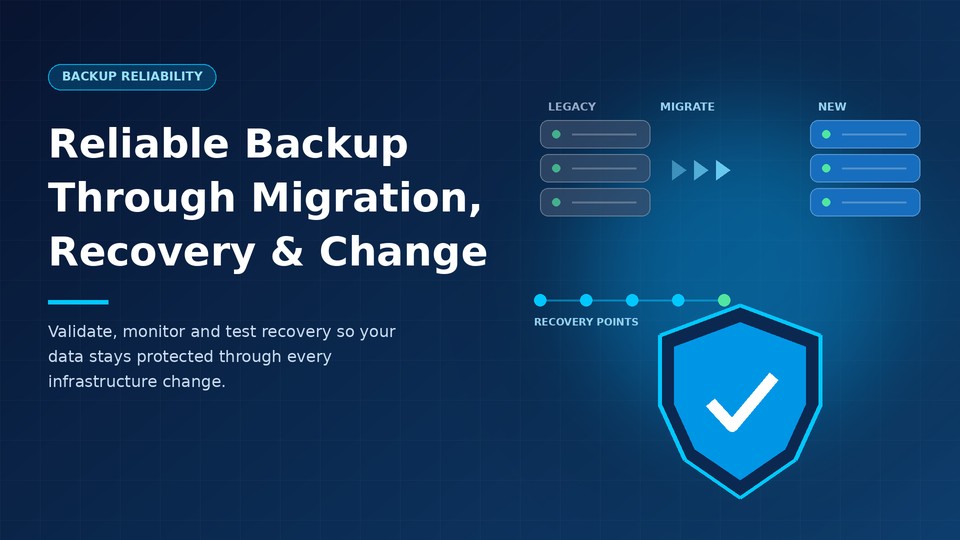
Modern businesses continuously change their IT infrastructure. Whether migrating from one backup platform to another, upgrading storage, moving workloads to the cloud, or recovering from an unexpected outage, maintaining reliable backup infrastructure is critical to business continuity.
A backup strategy should not only protect data under normal conditions—it should also remain dependable during backup migration, recovery operations, infrastructure changes, and system failures. With the right processes and technologies, organizations can minimize disruption while maintaining access to recoverable data.
1. Validate Backups Before Making Infrastructure Changes
Before migrating workloads or changing backup infrastructure, organizations should verify that existing backups are healthy and recoverable.
A successful backup job does not always guarantee successful recovery. IT teams should periodically test file, virtual machine, and application recovery and confirm that recovery objectives align with business requirements.
Storage Guardian helps organizations maintain visibility into backup environments, making it easier to monitor backup status and identify potential issues before infrastructure changes begin.
2. Maintain Backup Continuity During Migration
Backup migration introduces a period where organizations may be operating across legacy and new platforms. Eliminating the old environment too early can create unnecessary risk.
A controlled migration strategy should include:
• Identifying critical workloads
• Establishing migration timelines
• Maintaining appropriate recovery points
• Validating backups on the new platform
• Testing recovery before decommissioning the legacy system
For organizations transitioning between backup technologies, Storage Guardian can help support the migration process by providing backup management and monitoring capabilities across the environment.
3. Monitor Backup Infrastructure Continuously
Infrastructure changes can affect storage capacity, network connectivity, backup repositories, and job performance. Continuous monitoring helps IT teams detect problems before they affect recoverability.
Storage Guardian provides centralized visibility into backup environments, helping organizations monitor backup operations and identify issues that may require attention.
Instead of discovering a failed backup when a recovery is already required, proactive monitoring allows teams to investigate failures and take corrective action earlier.
4. Test Recovery, Not Just Backup
The ultimate purpose of backup infrastructure is recovery.
Organizations should regularly test whether critical data can actually be restored within their required Recovery Time Objective (RTO) and Recovery Point Objective (RPO).
Recovery testing can include:
• File and folder restoration
• Virtual machine recovery
• Application recovery
• Backup integrity verification
• Disaster recovery procedures
• Recovery from secondary or cloud repositories
Storage Guardian's backup services can help organizations maintain a structured approach to backup monitoring and data protection, supporting recovery readiness as infrastructure evolves.
5. Build Resilience Into Infrastructure Changes
Hardware replacements, cloud migrations, storage upgrades, and backup-platform transitions should all include data-protection considerations.
Following principles such as the 3-2-1 backup strategy, maintaining multiple recovery points, and keeping appropriate offsite or cloud copies can provide additional protection against hardware failures, ransomware, accidental deletion, and migration-related problems.
Storage Guardian supports organizations with Veeam-based backup and cloud solutions, helping businesses maintain protected copies of critical data while modernizing their backup infrastructure.
6. Centralize Backup Visibility With Storage Guardian
Managing backup infrastructure becomes increasingly complex as organizations add cloud workloads, virtual machines, physical servers, and multiple backup repositories.
Storage Guardian provides businesses with backup management, monitoring, and cloud-based data protection capabilities designed to simplify this environment. Centralized visibility can help IT teams understand backup health, identify potential problems, and maintain greater control during infrastructure changes.
Conclusion
Reliable backup infrastructure requires more than successfully completing backup jobs. Organizations need continuous monitoring, validated recovery, migration planning, backup continuity, and resilient storage strategies.
Whether migrating to Veeam, modernizing existing infrastructure, recovering from an outage, or expanding into cloud backup, Storage Guardian can help organizations maintain visibility and protection throughout the transition.
By making recoverability a core part of every infrastructure change, businesses can reduce operational risk and ensure their critical data remains protected when it matters most.


