RMM and Vulnerability Scanning: A Stronger MSP Security Model
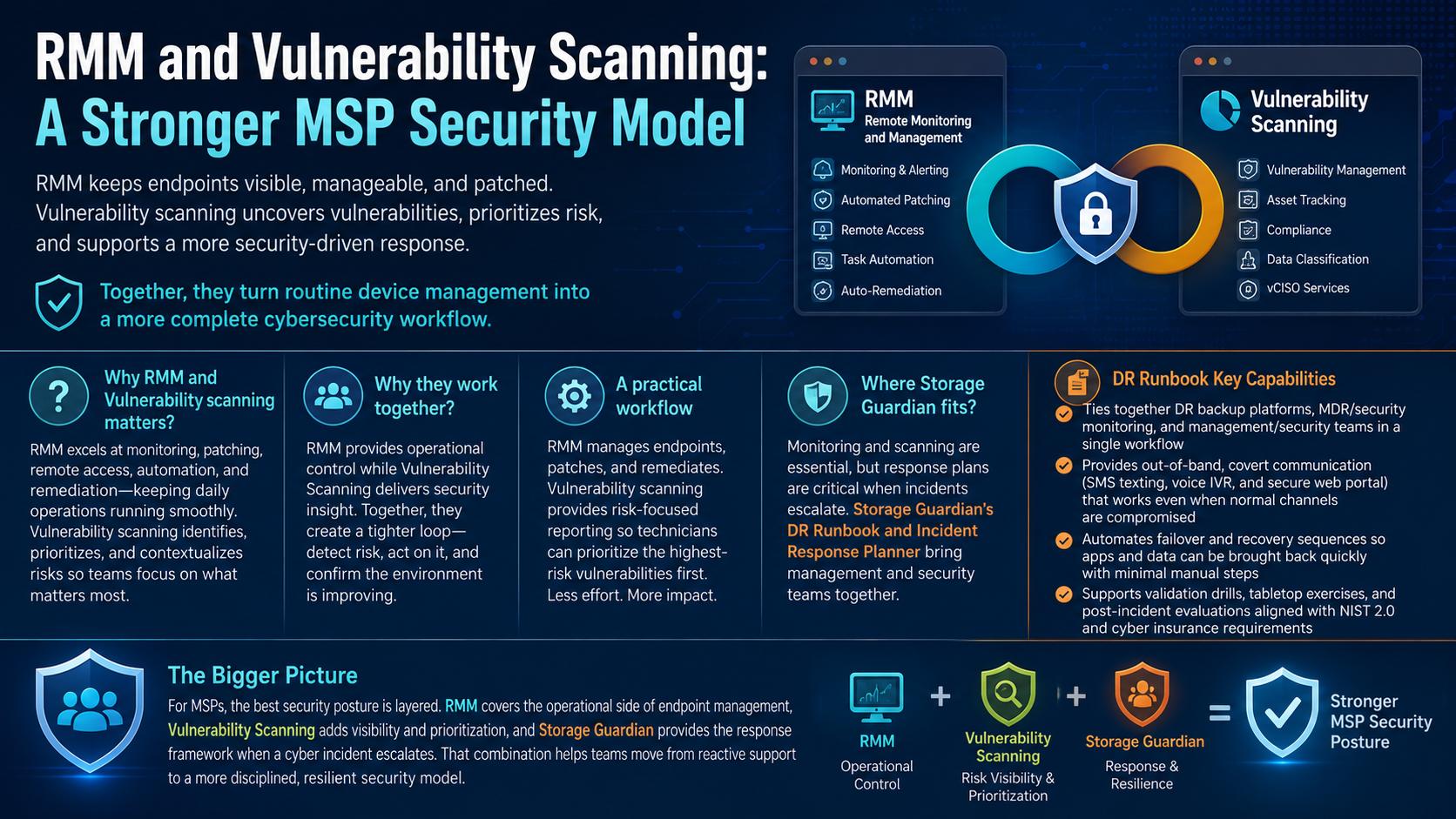
Remote Monitoring and Management (RMM) and Vulnerability scanning solve different problems, but they are most effective when used together. RMM keeps endpoints visible, manageable, and patched, while Vulnerability scanning helps uncover vulnerabilities, prioritize risk, and support a more security-driven response. For MSPs, that combination turns routine device management into a more complete cybersecurity workflow.
Why RMM and Vulnerability scanning matters?
RMM platforms are built around monitoring and alerting, automated patching, one-click device actions, secure remote access, endpoint task automation, and auto-remediation. That makes it valuable for day-to-day operations because technicians can manage many endpoints consistently without relying on manual fixes. In a busy MSP environment, that operational speed is what keeps small issues from becoming larger outages.
Vulnerability scanning focuses on vulnerability management, asset tracking, compliance, data classification, and vCISO services. Its vulnerability management approach emphasizes identifying, prioritizing, and remediating threats faster with contextual risk scoring and actionable reporting. That is important because many tools can find issues, but fewer help explain which ones matter most and what to fix first.
Why they work together?
The real value comes from combining operational control with security insight. RMM helps MSPs deploy agents, manage endpoints, patch systems, and take fast action, while Vulnerability Scanning helps teams scan, assess, and prioritize risk across the environment. Together, they create a tighter loop - detect risk, act on it, and confirm the environment is improving.
A practical workflow
A practical MSP workflow starts with RMM platform managing the endpoint fleet and handling patching and remediation tasks while the Vulnerability scanning produces reporting that helps technicians focus on the highest-risk vulnerabilities first. This reduces wasted effort because the RMM tool handles execution while the scanning platform provides the security context that guides decisions.
Where Storage Guardian fits?
Even strong monitoring and scanning does not replace incident response. Storage Guardian’s DR Runbook and Incident Response Planner are designed to bring management and security teams together with clear roles, centralized plans, validation drills, and out-of-band communication methods such as SMS.
The DR Runbook is an interactive, role-based disaster recovery playbook that:
• Ties together DR backup platforms, MDR/security monitoring, and management/security teams in a single workflow
• Provides out-of-band, covert communication (SMS texting, voice IVR, and secure web portal) that works even when normal channels are compromised
• Automates failover and recovery sequences so apps and data can be brought back quickly with minimal manual steps
• Supports validation drills, tabletop exercises, and post-incident evaluations aligned with NIST 2.0 and cyber insurance requirements
Their approach is useful when an incident disrupts normal access, because response planning becomes just as important as detection or remediation.
The Bigger Picture
For MSPs, the best security posture is layered. RMM covers the operational side of endpoint management, Vulnerability Scan adds Vulnerability-style visibility and prioritization, and Storage Guardian provides the response framework when a cyber incident escalates. That combination helps teams move from reactive support to a more disciplined, resilient security model.


