When Weather Becomes a Business Risk
Extreme weather is no longer just a forecast issue; it is a business continuity issue. Hurricanes, heatwaves, and heavy downpours can disrupt operations, damage facilities, interrupt supply chains and delay customers services. Climate volatility is also becoming more frequent and more expensive for businesses, which makes preparedness a strategic necessity rather than an optional precaution.
In Pittsburgh, recent heavy cloudburst has shown how quickly rain can create operational chaos, making it harder for employees to get to work, deliveries to move, and systems to stay online. Weather risk is not only about property damage; it is about whether the business can keep running at all
Hurricane Season Readiness
With hurricane season approaching, businesses should prepare before a storm hits. That means knowing who makes decisions, how employees are reached, where backups are stored, and how critical systems will be restored.
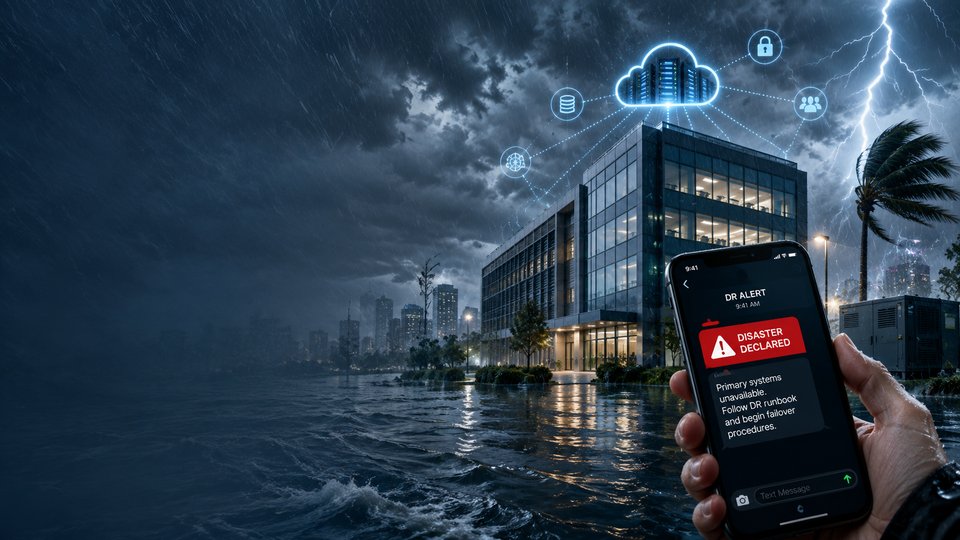
One of the most overlooked parts of preparedness is communication. If email, phones, or the primary network go down, teams still need a way to declare an incident and start recovery. That is why out-of-band communication is so important. It gives organizations a separate channel to coordinate response when normal systems are unavailable.
Disaster Recovery Checklist
A practical disaster recovery checklist should be simple, clear, and ready before an emergency happens:
• Identify critical systems, applications, and data.
• Define recovery time objectives and recovery point objectives.
• Document roles, contacts, and escalation paths.
• Keep backup copies off-site and regularly tested.
• Create alternate communication methods for incident declaration.
• Verify access to cloud recovery or failover resources.
• Test the plan with tabletop exercises and live validation drills.
• Review and update the plan before peak weather seasons.
This checklist matters because a plan that exists only on paper is not enough during a crisis. Teams need a repeatable process that can be executed quickly, even if key staff are offline or normal communication tools are unavailable. The more a plan depends on the same infrastructure that may fail during a storm, the weaker that plan becomes.
How Storage Guardian Helps?
Storage Guardian strengthens disaster recovery by using out-of-band SMS to coordinate response when primary systems are down. Its DR runbook workflow supports disaster declaration, plan creation, and failover actions through a separate communication path, including SMS, voice, and web-based declaration methods. The platform also supports recovery planning details such as contacts, restore points, network configuration, and recovery sequence, which helps teams move faster when every minute counts.
Storage Guardian’s approach is especially valuable when weather makes conventional access impossible. Its disaster recovery process is designed so teams can initiate failover without relying on direct access to primary systems, and it can support hot standby, warm, or cold recovery options depending on business needs. For organizations facing flooding, hurricanes, or other severe weather events, that kind of out-of-band resilience can be the difference between a short disruption and a full operational shutdown.
Closing Thoughts
Incremental weather events are becoming a major business risk because they hit the exact systems companies rely on most power, connectivity, access, and communication. Whether it is a Pittsburgh-style cloudburst, a hurricane, or an extreme heatwave, the goal is the same, keep the business operating when the environment is not cooperating. Disaster recovery is no longer just about storing backups; it is about making sure the organization can actually use them when conditions are worst.
Storage Guardian helps close that gap by pairing recovery planning with out-of-band communication and structured response workflows. For businesses that want to stay operational through severe weather, that combination makes disaster recovery more practical, faster to activate, and more reliable under pressure.


