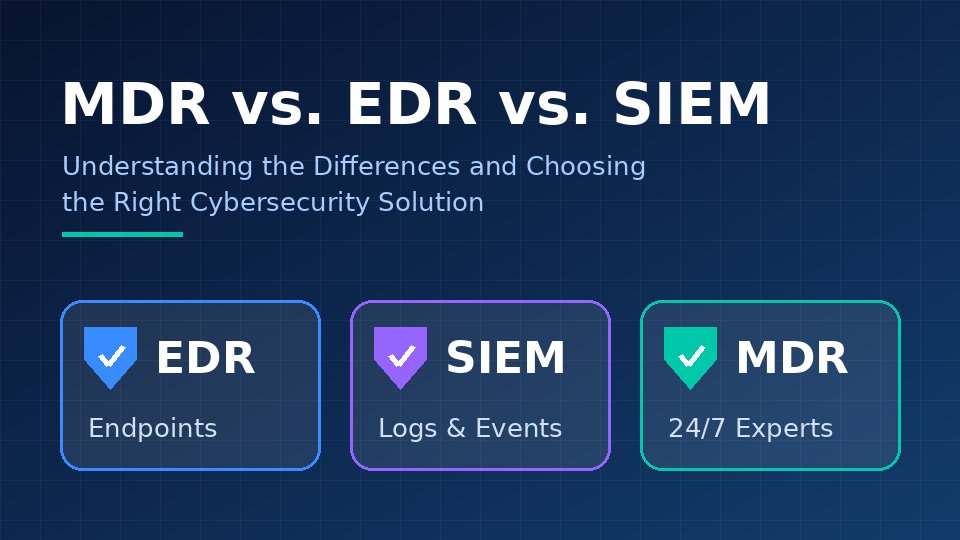
Choosing between MDR, EDR and SIEM can feel like decoding alphabet soup, yet the decision directly affects how fast your business detects and stops a breach. Each solution tackles a different part of the problem, and the wrong pick can leave gaps attackers love to exploit. This guide breaks down the differences between MDR vs. EDR vs. SIEM so you can match the right cybersecurity solution to your risk, budget and team.
EDR software monitors laptops, servers and mobile devices for suspicious behavior. It records endpoint activity, flags threats such as ransomware and fileless malware, and lets analysts isolate infected devices in seconds. EDR delivers deep visibility where attacks often begin, but it only sees endpoints, and it produces alerts that someone must investigate. For lean IT teams, that alert volume quickly becomes overwhelming. EDR works best when you already have skilled analysts available around the clock.
SIEM platforms collect and correlate logs from across your environment, including firewalls, cloud applications, identity systems and endpoints. By connecting scattered events, a SIEM reveals attack patterns that no single tool can see, and it simplifies compliance reporting for standards like PCI DSS and HIPAA. The tradeoff is complexity. SIEM requires careful tuning, significant storage and experienced analysts to separate real threats from noise, so it suits larger organizations with a dedicated security operations team.
MDR is a service, not just software. A team of security experts monitors your environment 24/7, investigates alerts, hunts for hidden threats and takes action on your behalf. Most MDR providers combine EDR technology with SIEM-style log analysis and human expertise. That makes MDR ideal for small and mid-sized businesses that want enterprise-grade protection without building an in-house security operations center (SOC).
The core difference is scope and who does the work. EDR focuses on endpoint activity, and your team must investigate every alert. SIEM gathers logs from across your entire environment for broad visibility and compliance reporting, but it also depends on your analysts to interpret the data. MDR delivers detection and response as a service, with the provider's experts monitoring 24/7 and acting on threats for you. In short, EDR and SIEM are tools, while MDR is a tool plus the people who run it.
To choose the right cybersecurity solution, ask three questions: Do we have analysts watching alerts around the clock? Which compliance rules apply to us? How quickly must we respond to an attack? If the answers are "no, several, and immediately," MDR is usually the most practical path.
Storage Guardian pairs managed cybersecurity with secure backup and disaster recovery, so your protection doesn't stop at detection. Expert analysts monitor threats, investigate incidents and respond quickly, which cuts through alert fatigue and reduces downtime. Because your data is also protected by reliable, recoverable backups, a successful ransomware attack doesn't have to become a business-ending event.
Whether you need endpoint protection, centralized visibility or full MDR, Storage Guardian tailors its solution to your size, industry and compliance requirements, giving you the benefits of EDR, SIEM and MDR without the burden of managing them alone.
Ready to strengthen your defenses? Contact Storage Guardian today for a free consultation and find the cybersecurity solution that fits your business.


